

What to See at the Louvre (That Isn't the Mona Lisa)
19 works worth finding and exactly where to find them.
Some links on this page marked with * are affiliate links. I earn a small commission if you purchase at no extra cost to you. I only recommend products I personally use. Thank you for supporting Traveling Berri!
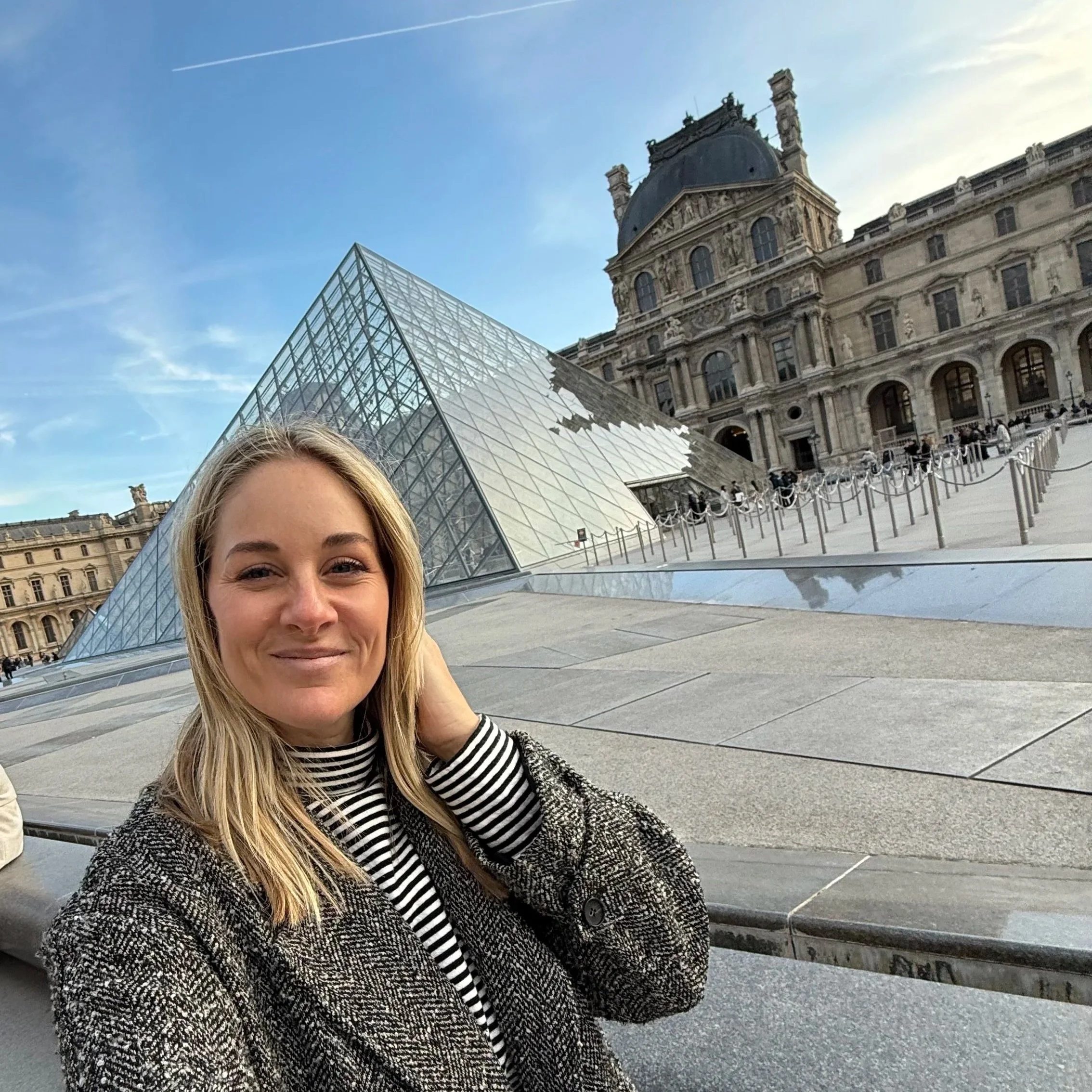
Having been to the Musée du Louvre, I'll say it. The Mona Lisa is smaller than you expect, further away than you'd like, and surrounded by more people than you've ever seen around a single painting. Give her a glance, appreciate the history, and then turn around because directly behind you and throughout the rest of this enormous museum is some of the most extraordinary art ever created, and so many people miss it.
Having been to my fair share of museums around the world, I can say that the Louvre is a place that rewards slower, more intentional exploration. This isn't a comprehensive guide to every room. That would take a week! This is the list I wish I'd had. A specific list of works across all three wings, with exact locations so you can actually find them without getting lost for an hour.
Navigating the Louvre
The Louvre is divided into three wings: Denon, Sully, and Richelieu. Each has multiple levels. When planning your route, group pieces by wing and level to avoid backtracking. The museum map is your best friend. Grab one at the entrance or download the Louvre app before you go.
First-time visitor tip: a guided tour* is absolutely worth it. You skip the general entrance line, enter through the priority Richelieu entrance, and actually understand what you're looking at instead of wandering 9 miles of galleries hoping to stumble on the highlights.
Denon Wing, Level 1
Liberty Leading the People Eugène Delacroix's iconic painting of the French Revolution (the one you've seen on postcards, Coldplay albums, and museum gift shop tote bags) is far more powerful in person than any reproduction suggests.
The Raft of Medusa A monumental painting depicting the real-life survivors of the shipwrecked French frigate La Méduse in 1816, adrift on a raft after days of conflict, starvation, and despair. It’s one of the most heartbreaking works in the museum.
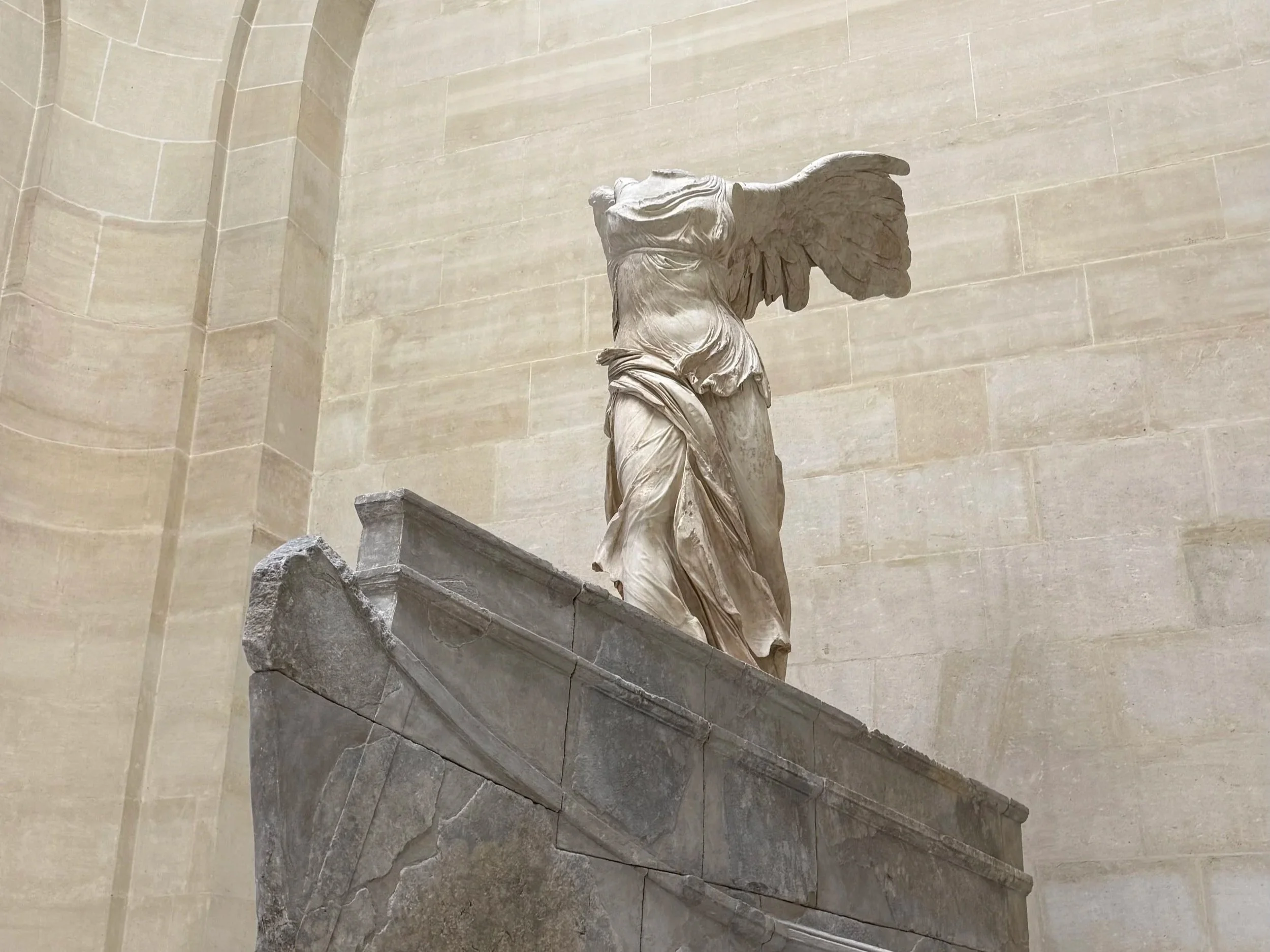
Winged Victory of Samothrace A 2,200-year-old marble goddess of victory so masterfully sculpted that her robes appear to move in the wind, widely considered one of the greatest surviving sculptures from the ancient world.
Wedding Feast at Cana Hanging directly opposite the Mona Lisa and almost entirely ignored because of it, this enormous Veronese painting depicts the biblical miracle of water turned to wine and is jaw-dropping in scale and detail.
Denon Wing, Level 0
Dying Slave and Rebellious Slave Two of Michelangelo's most celebrated sculptures, originally intended for the tomb of Pope Julius II, showing the human form in states of surrender and resistance that feel remarkably alive in marble.
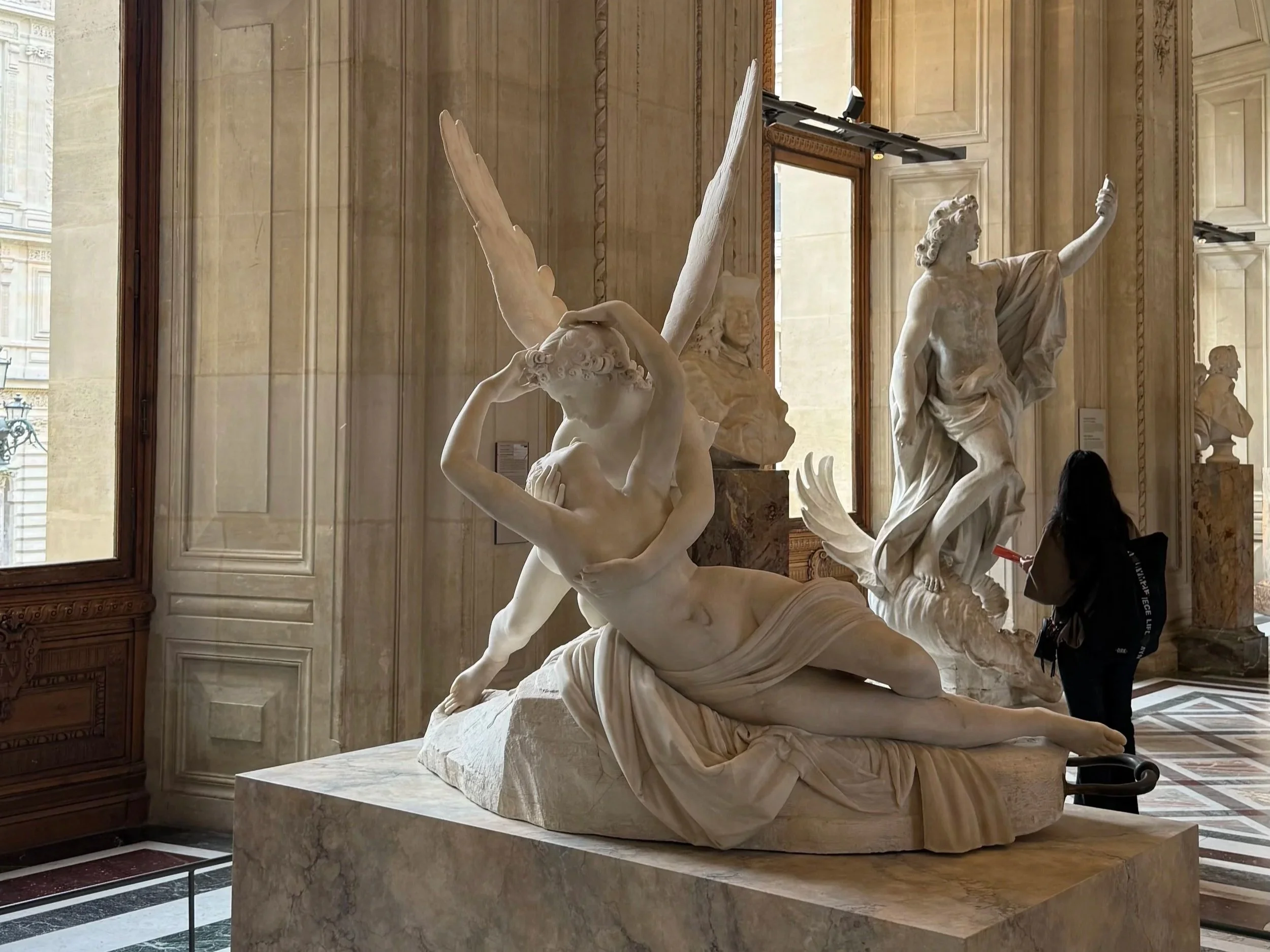
Psyche Revived by Cupid's Kiss A Neoclassical sculpture by Antonio Canova depicting the exact moment Cupid revives Psyche with a kiss. It’s widely regarded as one of the most romantic and technically masterful sculptures ever created.
Sully Wing, Level 0
Balcony of the Caryatids One of the oldest surviving rooms in the Louvre palace itself, named for its carved female figures that serve as architectural columns, a reminder that the building is as much a work of art as what's inside it.
Venus de Milo One of the most recognized sculptures in the world, a nearly 2,100-year-old marble depiction of Aphrodite whose missing arms have sparked centuries of debate and whose beauty remains genuinely arresting in person.
Egyptian Sarcophagi A remarkable collection of ancient Egyptian coffins and funerary artifacts that offers a completely different kind of awe than the paintings and sculptures elsewhere in the museum.
Athena A striking ancient Greek sculpture of the goddess of wisdom and war that tends to be overlooked despite being one of the finest examples of classical Greek sculpture in the collection.
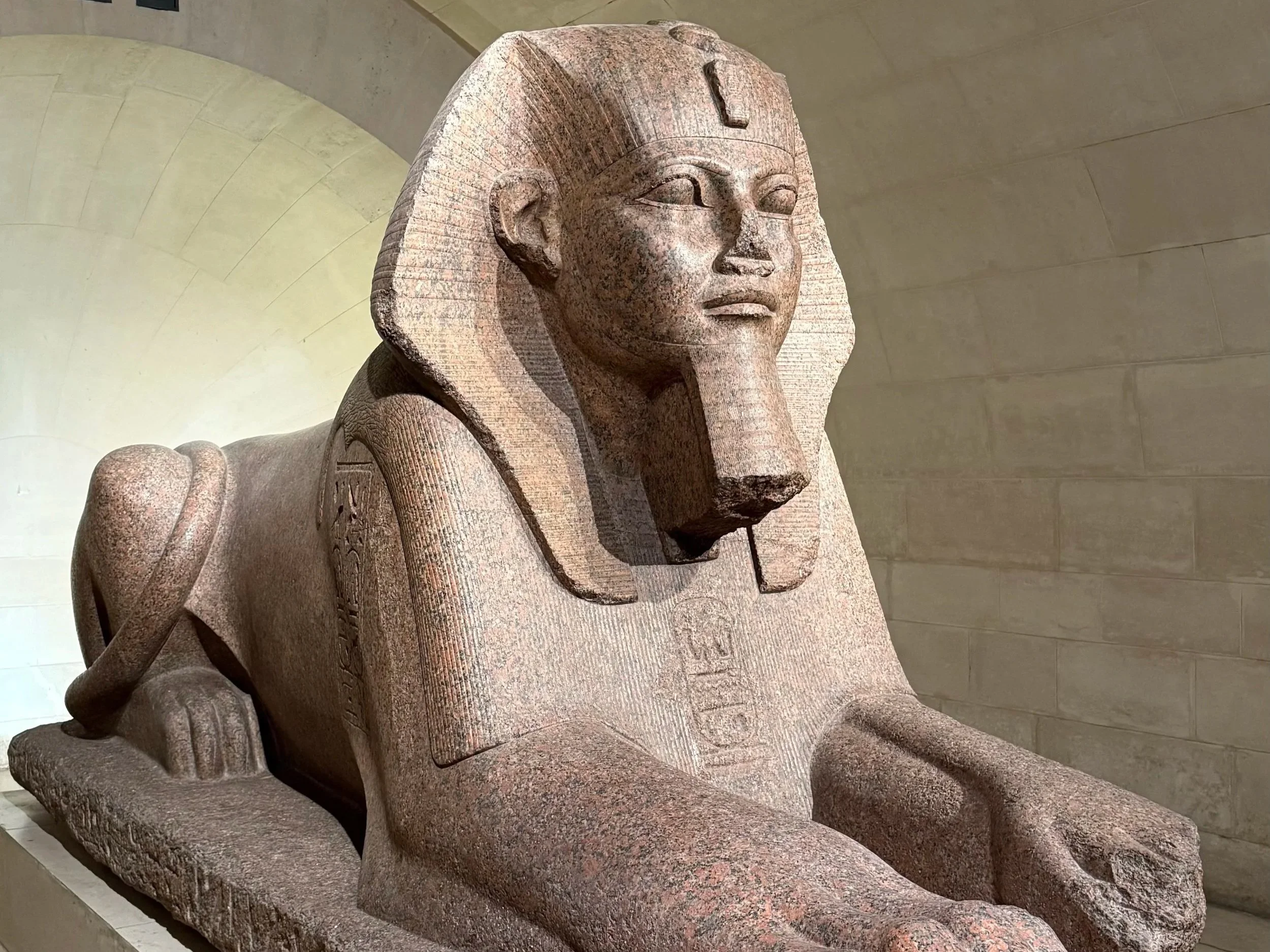
Great Sphinx of Tanis A massive granite sphinx dating back thousands of years, discovered in the ruins of the Temple of Amun-Ra and acquired by the Louvre in 1826. It’s not Giza-sized, but genuinely impressive up close.
Sully Wing, Level -1
Medieval Louvre and the Moats The excavated remains of the original 12th-century Louvre fortress, preserved beneath the museum and viewable from walkways. It’s a powerful experience that puts the whole building in historical context.
Richelieu Wing, Level 0
Lamassu Enormous winged bull statues from the ancient Assyrian palace of Sargon II, each carved from a single stone and designed with five legs so they appear to be standing still or walking depending on the angle.
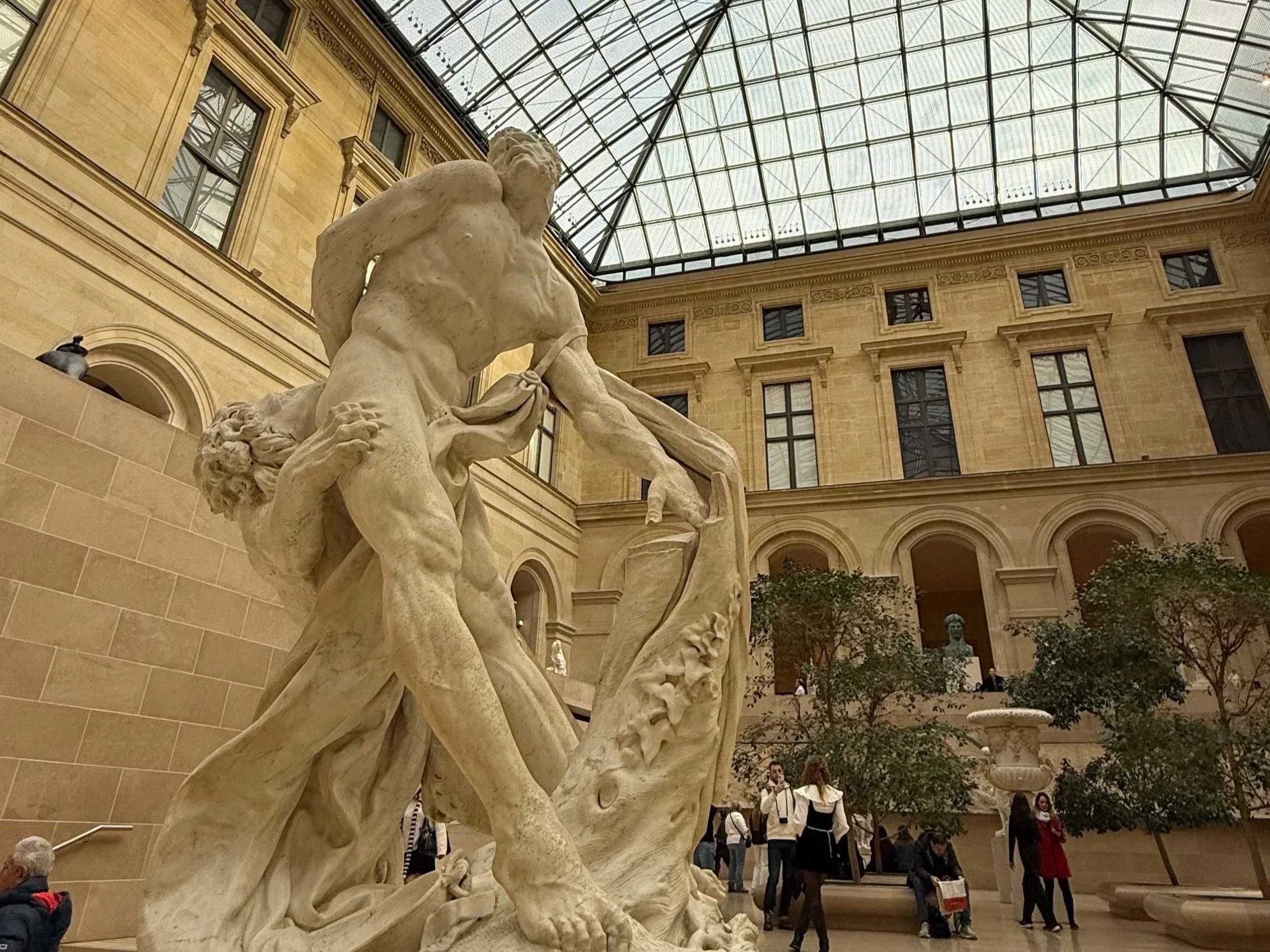
Cour Marly A stunning glass-roofed courtyard filled with French sculpture from the 17th and 18th centuries, including enormous equestrian statues. It’s one of the most beautiful spaces in the entire museum and often not crowded.
Code of Hammurabi One of the oldest written legal codes in human history, carved into a nearly eight-foot basalt stele around 1754 BC. This artifact really makes you realize with how long humans have been making rules for each other.
Richelieu Wing, Level 1
Napoleon III Apartments Eleven rooms of floor-to-ceiling gold, crimson velvet, crystal chandeliers, and painted ceilings that give Versailles a serious run for its money. It’s one of the most jaw-dropping and least-visited spaces in the entire Louvre, tucked away in rooms 543-548 and included in standard admission.
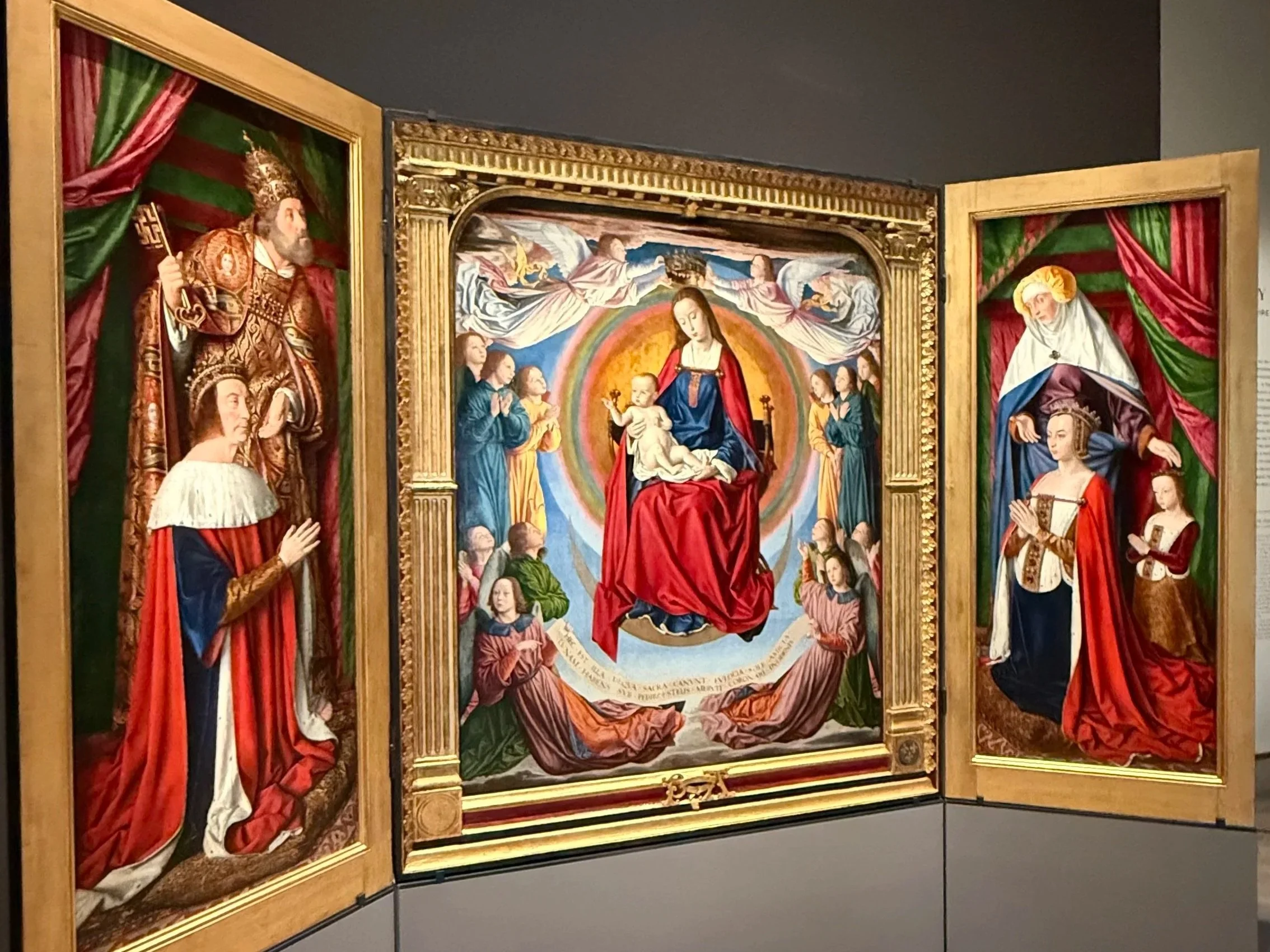
Triptych of Moulins A stunning late 15th-century Flemish altarpiece by the Master of Moulins, featuring extraordinarily detailed figures and rich color that rivals anything in the Italian collections and is almost never crowded.
Richelieu Wing, Level 2
Galerie Médicis A full gallery of massive paintings by Peter Paul Rubens commissioned by Marie de Medici to glorify her own life story. The scale, the drama, and the sheer audacity of the commission make this one of the most memorable rooms in the Louvre.
Tips for your visit
Book timed-entry tickets online in advance. Tickets sell out.
The Louvre is closed on Tuesdays, so plan accordingly.
Admission is free for all visitors on the first Friday of each month after 6pm, except in July and August. It’s also free on July 14th, Bastille Day.
Download the Louvre map before you go for offline viewing.
If you're short on time, group your route by wing and level.
There are restaurants inside, but it’s best to eat before you arrive, as getting food adds time you could spend looking at actual art.
Some links on this page marked with * are affiliate links. I earn a small commission if you purchase at no extra cost to you. I only recommend products I personally use. Thank you for supporting Traveling Berri!
