

4 Surprising Things I Learned on a Food Tour in Medellín, Colombia
The fourth one I genuinely did not see coming
Some links on this page marked with * are affiliate links. I earn a small commission if you purchase at no extra cost to you. I only recommend products I personally use. Thank you for supporting Traveling Berri!
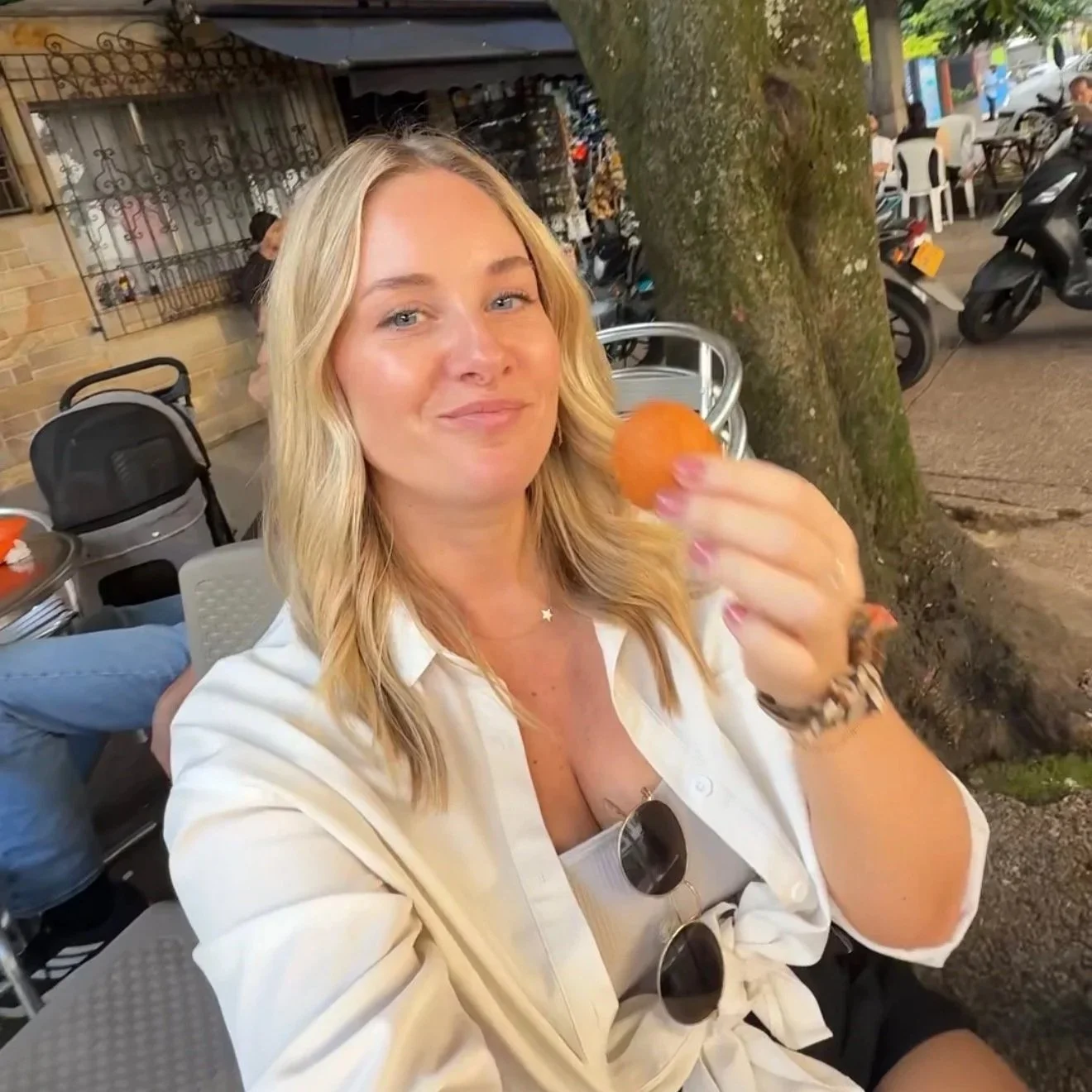
I've done food tours in a lot of cities, and the best ones always leave you with something you couldn't have learned any other way. This one delivered four times over.
I did this food tour in Laureles, a residential neighborhood in the western part of Medellín that Time Out named the “coolest neighborhood in the world” in 2023. It's a locals' neighborhood in the best sense: tree-lined streets, neighborhood restaurants, a pace that feels nothing like the tourist trail. If you haven't spent time there yet, this tour is a good reason to go.
Our guide was David from Real City Tours, who has now led me through multiple experiences in Medellín and consistently makes everything feel richer and more layered than it would on my own.
Here's what stuck with me.
Colombians Put Cheese in Everything
I thought I understood cheese as an ingredient. Colombia expanded my definition considerably.
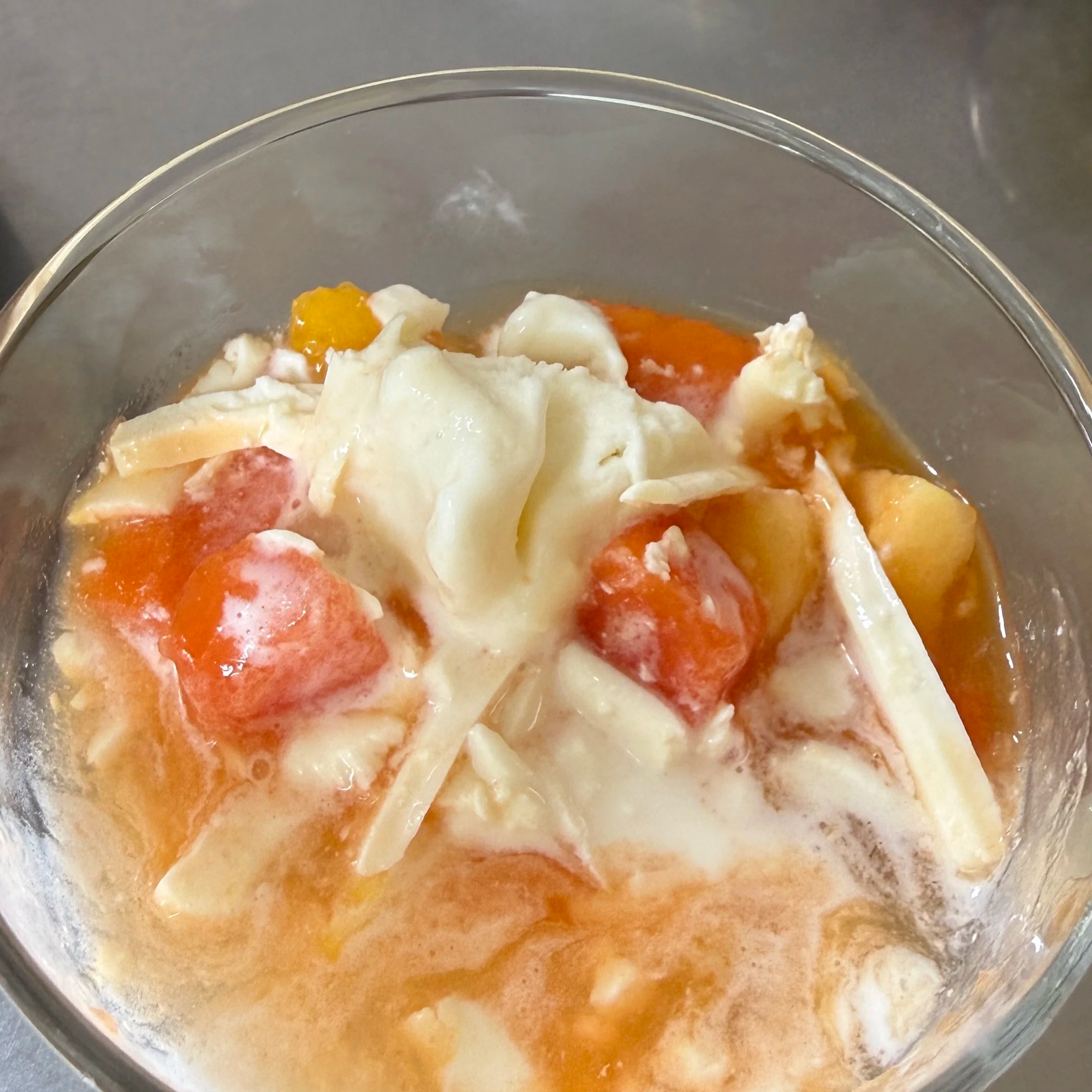
Our first stop was a fruit salad called salpicón, a Colombian staple made with a mix of fresh tropical fruits, fruit juice, and sometimes a little something fizzy. Already good. Then came the cheese and ice cream on top, and I had to recalibrate everything I thought I knew about fruit salad.
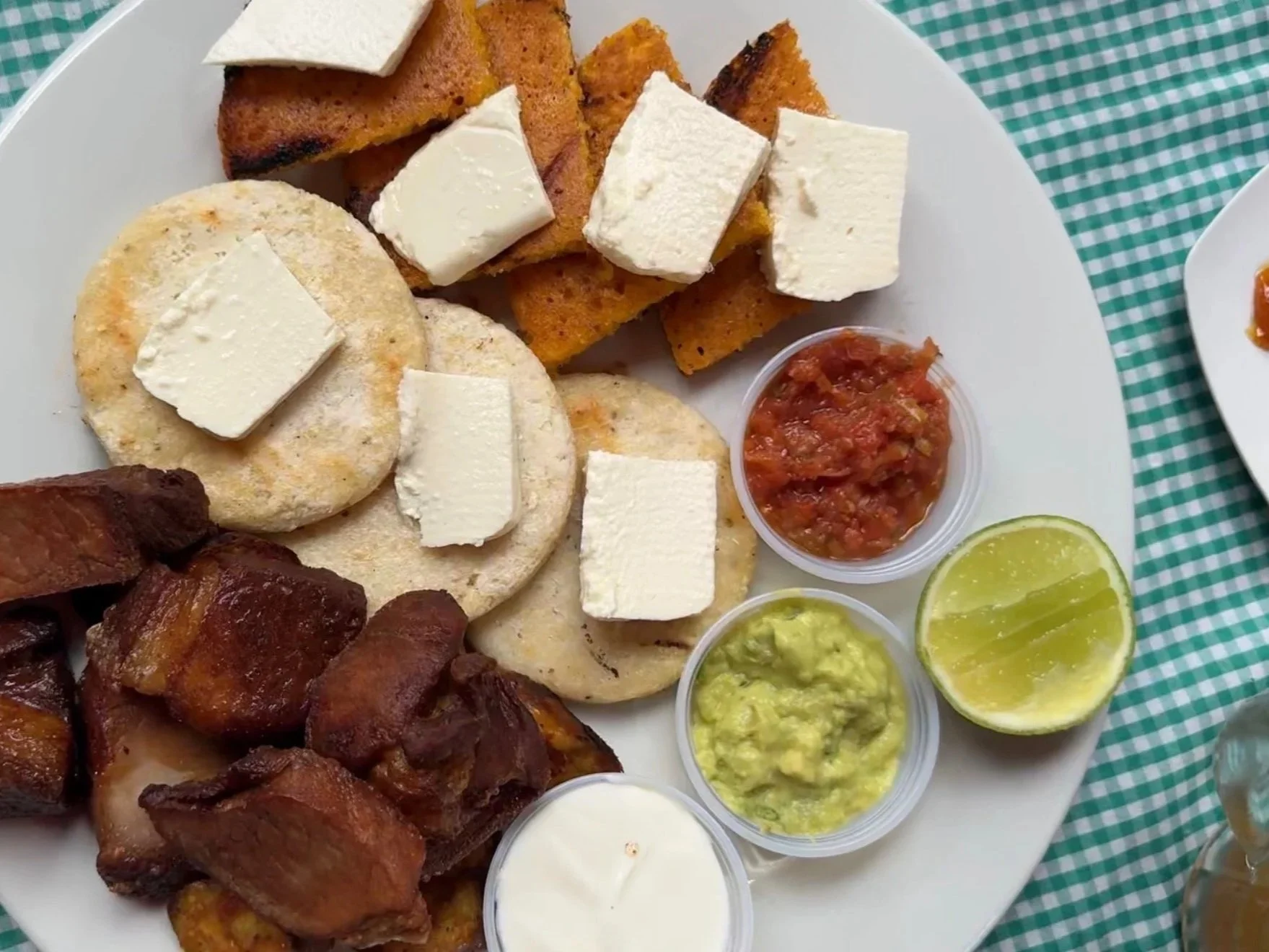
The cheese used throughout Colombian cuisine is typically a fresh white cheese, mild, slightly salty, and with a soft, stretchy texture similar to a young mozzarella or queso blanco. It doesn't overpower anything, which is exactly why it works in so many contexts. Colombians add it to hot chocolate, stirring it in until it softens and melts slightly into the drink. They add it to coffee. They add it to arepas, soups, and snacks. Once you know to look for it, you start seeing it everywhere.
Colombian Food Is Not Spicy
As someone with the spice tolerance of a toddler, this was the most personally welcome revelation of the entire tour.
Colombian cuisine leans savory, sweet, and citrusy. The flavors are rich and layered but not heat-driven. You won't find the chile-forward intensity of Mexican food or the slow burn of some other Latin American cuisines here. The seasoning tends to come from herbs, slow cooking, and fresh ingredients rather than heat.
For spice-averse travelers, Colombia is a safe and deeply satisfying country to eat your way through. Order freely and without fear.
The Lemonade Is Actually Limeade
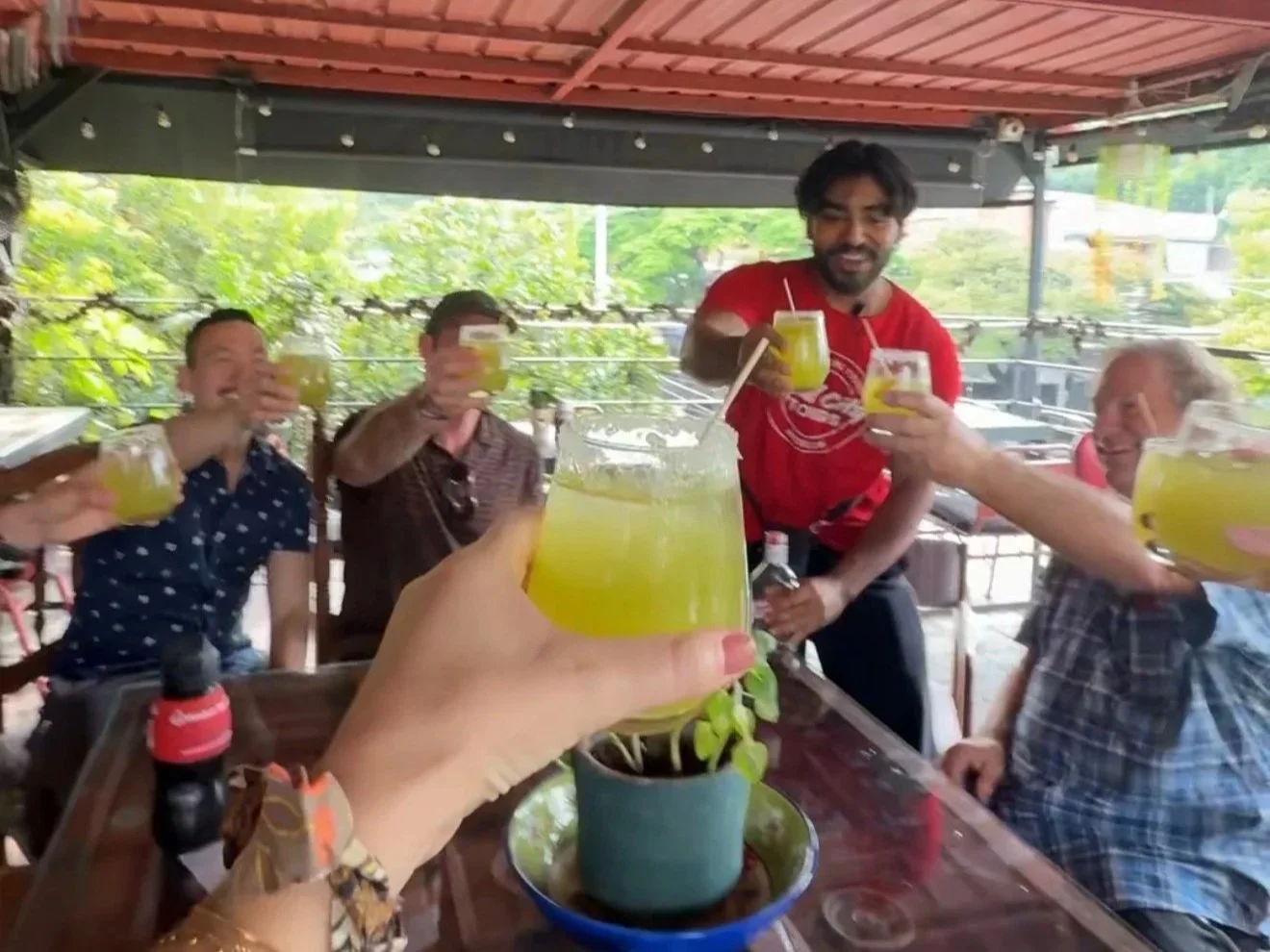
I had been ordering lemonade all over Medellín before this tour, enjoying every glass, completely unaware that I had never once been drinking lemon juice.
It's all limes. Limes are far more widely grown and used in Colombia than lemons, so what appears on menus as limonada is made with lime juice. The result is bright, tart, and delicious, often blended with water or milk and a little sugar into something that sits somewhere between a limeade and a light smoothie. The milk version, limonada de coco when coconut milk is involved, is absolutely worth ordering wherever you see it.
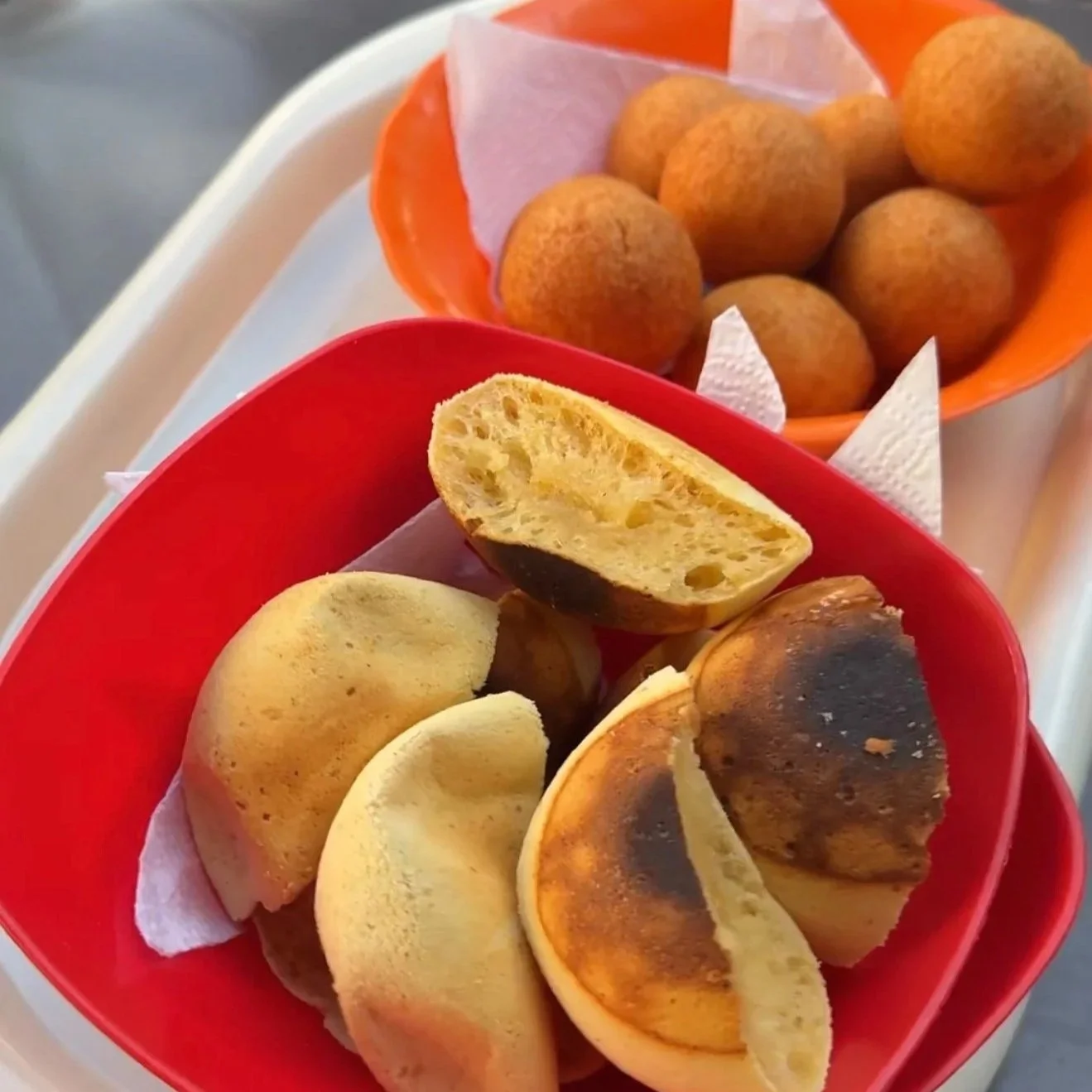
There's a Jewish Culinary Influence Hiding in Plain Sight
Jewish immigrants began arriving in Colombia in the late 19th and early 20th centuries, many fleeing persecution in Europe and the Middle East. A significant number settled in the Antioquia region, which includes Medellín. Colombia was and remains a deeply Catholic country, and many Jewish families kept their religious identity quiet in order to assimilate and build lives without friction.
But their culinary influence stayed. Certain dishes, cooking techniques, and food traditions that trace back to these communities have woven themselves into the fabric of Antioquian cuisine over the generations, present enough to be felt but quiet enough that most people eating the food have no idea where certain elements came from. This history only surfaces when someone who knows it takes the time to tell you.
That's exactly what David did, and it's the reason I'd recommend this tour to anyone visiting Medellín regardless of how much they think they already know about the food here.
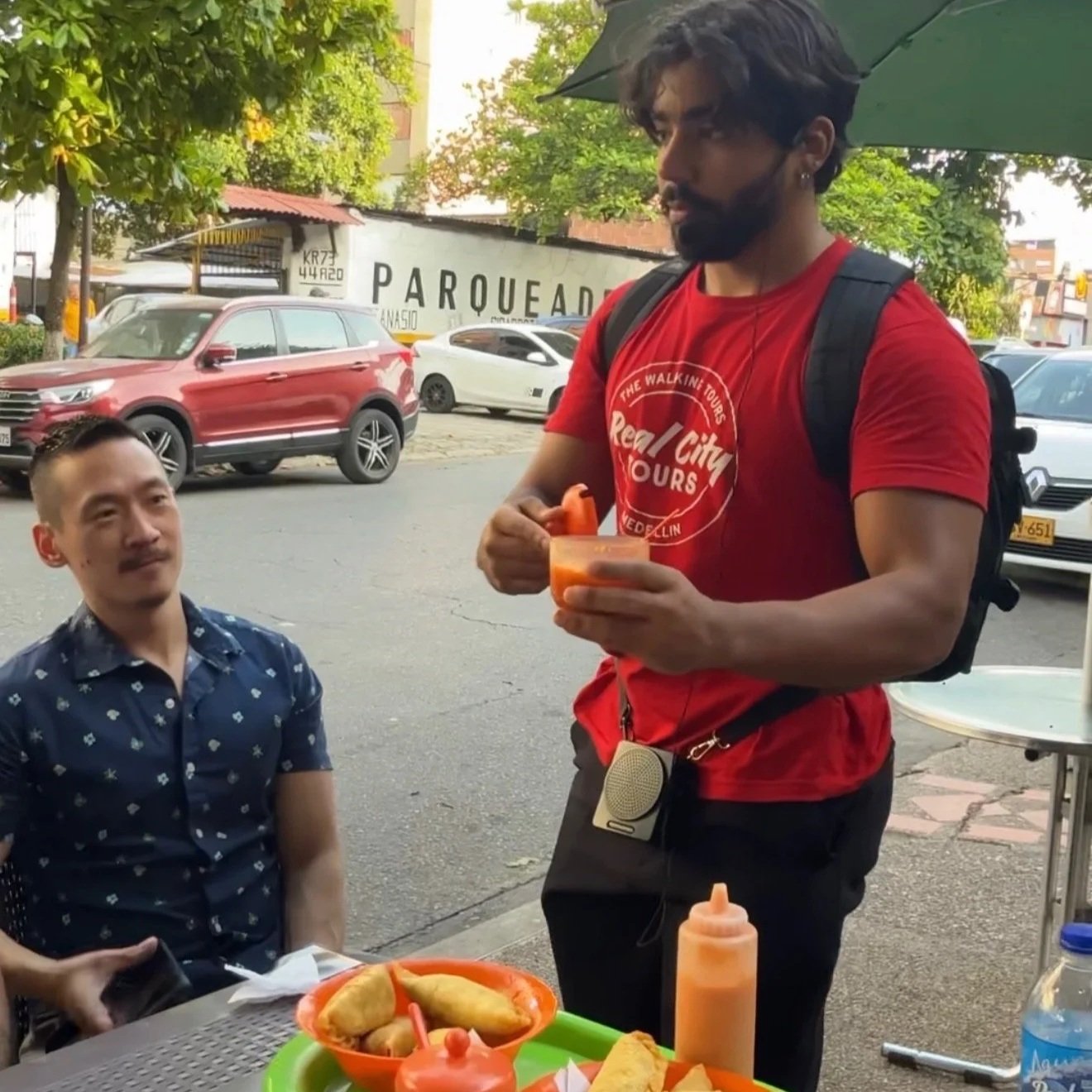
Should You Do a Food Tour in Medellín?
Definitely, and specifically this one. Real City Tours runs food experiences that go well beyond tasting. The history, the cultural context, the neighborhood itself: it all adds up to something that feels more like an education than a meal, which is the highest compliment I can give a food tour.
Some links on this page marked with * are affiliate links. I earn a small commission if you purchase at no extra cost to you. I only recommend products I personally use. Thank you for supporting Traveling Berri!
