

Notre Dame Cathedral Paris: What to Know Before You Visit (And Why You Should Go Even If You're Not Religious)
A nearly 1,000-year-old cathedral that has survived revolutions, wars, and fire. And just reopened to the world.
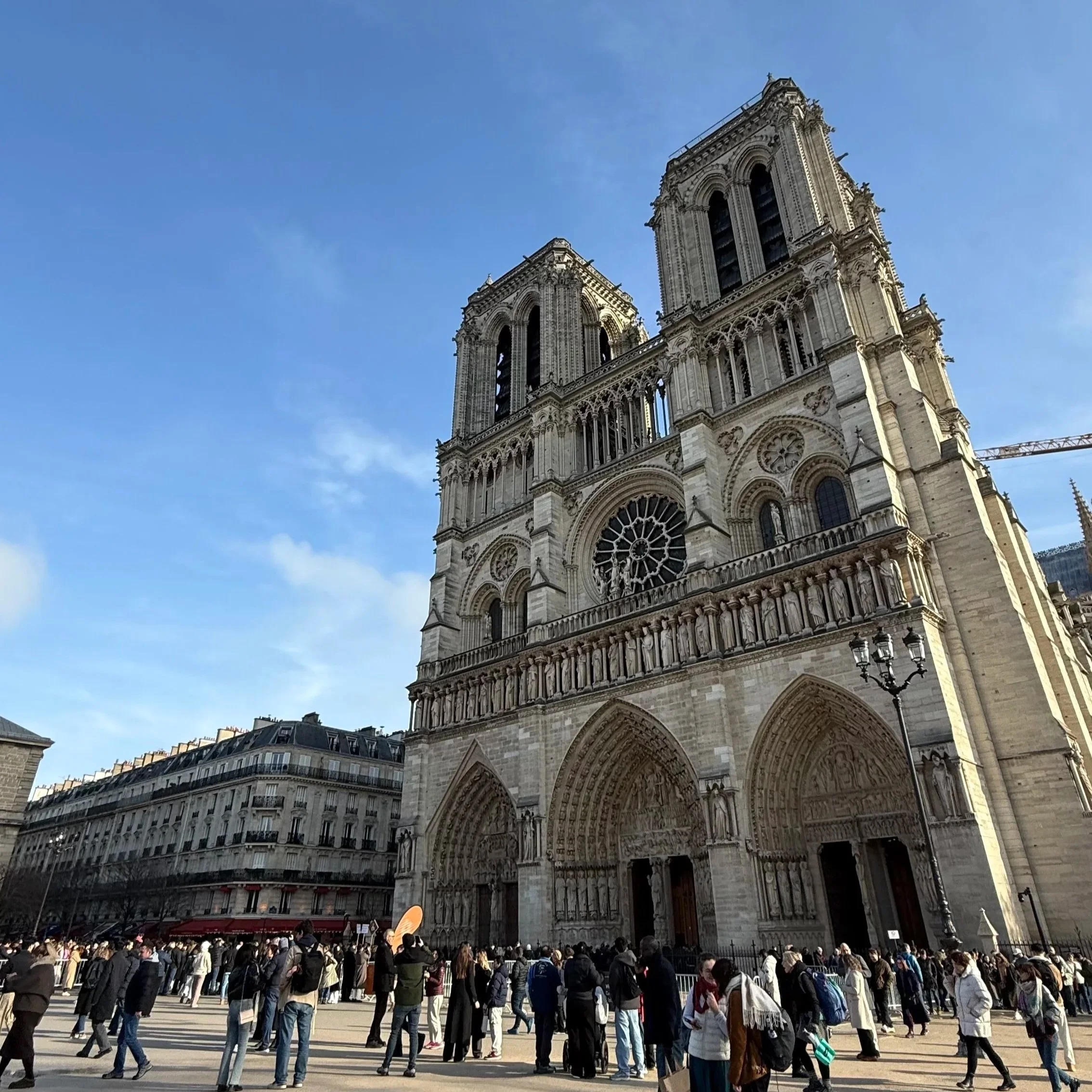
I'll be honest: I'm an atheist. And Notre Dame Cathedral in Paris just stumped me with its unbelievable magnificence.
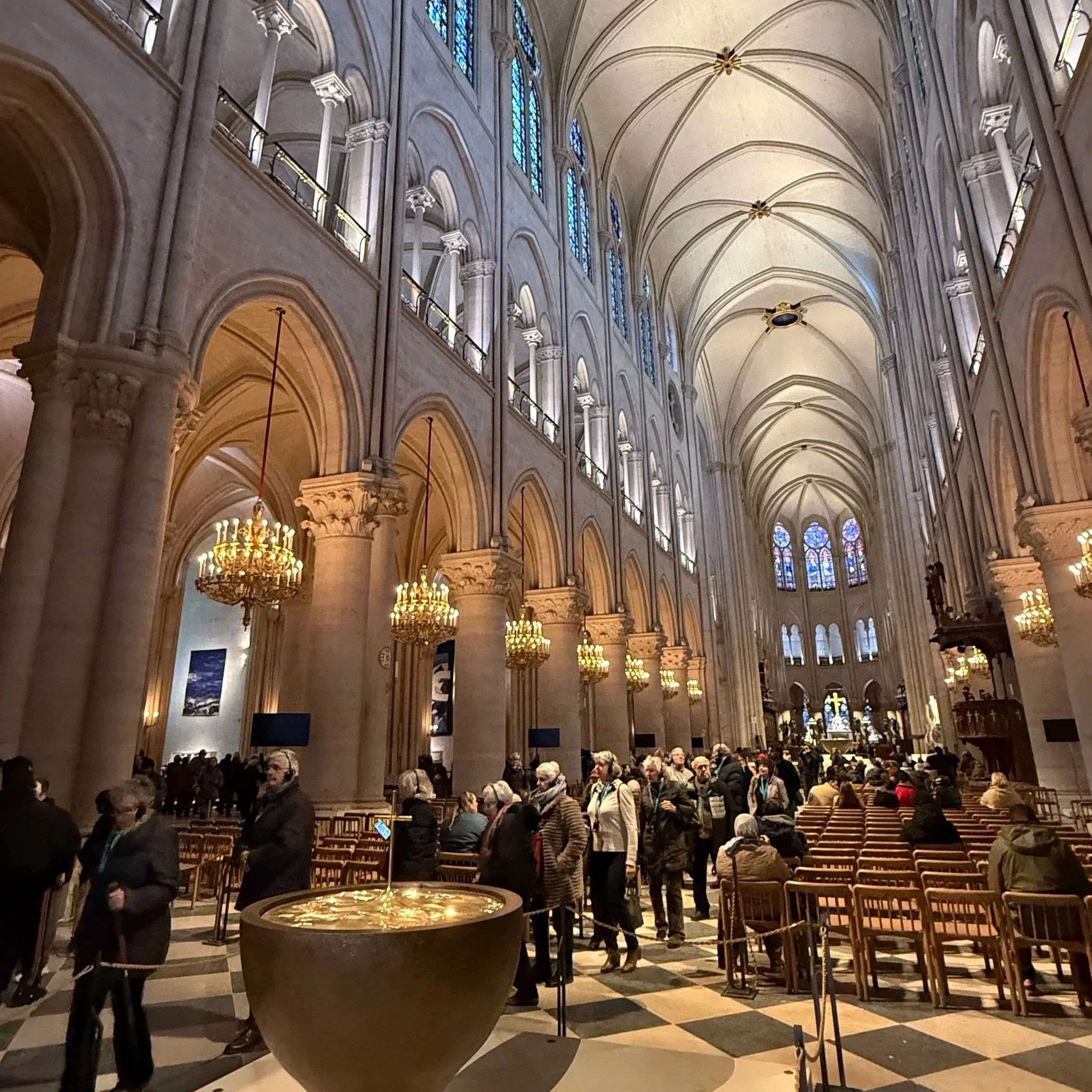
It’s a funny thing to admit, because on paper, visiting a cathedral when you don't believe in god seems like a strange use of an afternoon in one of the world's great cities. But standing inside Notre Dame, looking up at those impossible vaulted ceilings and the light pouring through 800-year-old rose windows, I understood immediately why people have been coming here for nearly a millennium. You don't need faith to feel something in this building.
If you're heading to Paris and wondering whether Notre Dame is worth your time, the answer is YES. And this guide covers everything you need to know, from the history and what to see, to how to get in and what it costs (less than you'd think).
Why Notre Dame is worth your time, even if you're not religious
There are three main reasons I'd give anyone who's on the fence.
The history. Construction began in 1163 and was completed in 1345, making the cathedral over 860 years old. Think about what this building has lived through. It survived the French Revolution, when it was repurposed as a Temple of Reason and largely stripped of its religious contents. Napoleon Bonaparte crowned himself Emperor here in 1804. It has been a backdrop to some of the most dramatic moments in French history, and it's still standing.
The culture. Notre Dame isn't just a church. It's a symbol of Paris so universally recognized that you can say the name anywhere in the world and people know exactly what you mean. Victor Hugo wrote "The Hunchback of Notre Dame" because of this building, and that novel is largely credited with saving it from demolition in the 19th century, when the French government was considering tearing it down. The cathedral also holds the Crown of Thorns, which many Christians believe was worn by Jesus during the crucifixion, and which was safely evacuated during the 2019 fire. Whether you're religious or not, an artifact that carries that weight of belief for that many people is worth pausing over.
The architecture. French Gothic design at this scale is designed to make you feel small. And it works. The height, the light, the flying buttresses outside, the level of carved detail that took generations of craftsmen to complete. It's humbling in the best way. I don't need to believe in god to appreciate what human beings built in his name.
The fire and the restoration
On April 15, 2019, a fire broke out in Notre Dame's roof space. By the time it was extinguished, the wooden spire had collapsed, most of the wooden roof had been destroyed, and the cathedral's upper walls were severely damaged. The images of the fire went around the world. It felt like watching something irreplaceable disappear in real time.
Two thousand workers and specialists spent five years on a restoration project that cost approximately €700 million, funded by global donations exceeding €840 million. French carpenters, stonemasons, and craftspeople revived centuries-old techniques to rebuild what was lost. Notre Dame officially reopened on December 7, 2024.
Visiting now means seeing Notre Dame in its most carefully restored state in modern history.
What to see inside
The nave and vaulted ceilings The main hall of the cathedral is the first thing that hits you when you walk in. The ceiling soars to 115 feet, and the sheer scale of it is disorienting (in a good way). Take a few minutes here before you start moving around.
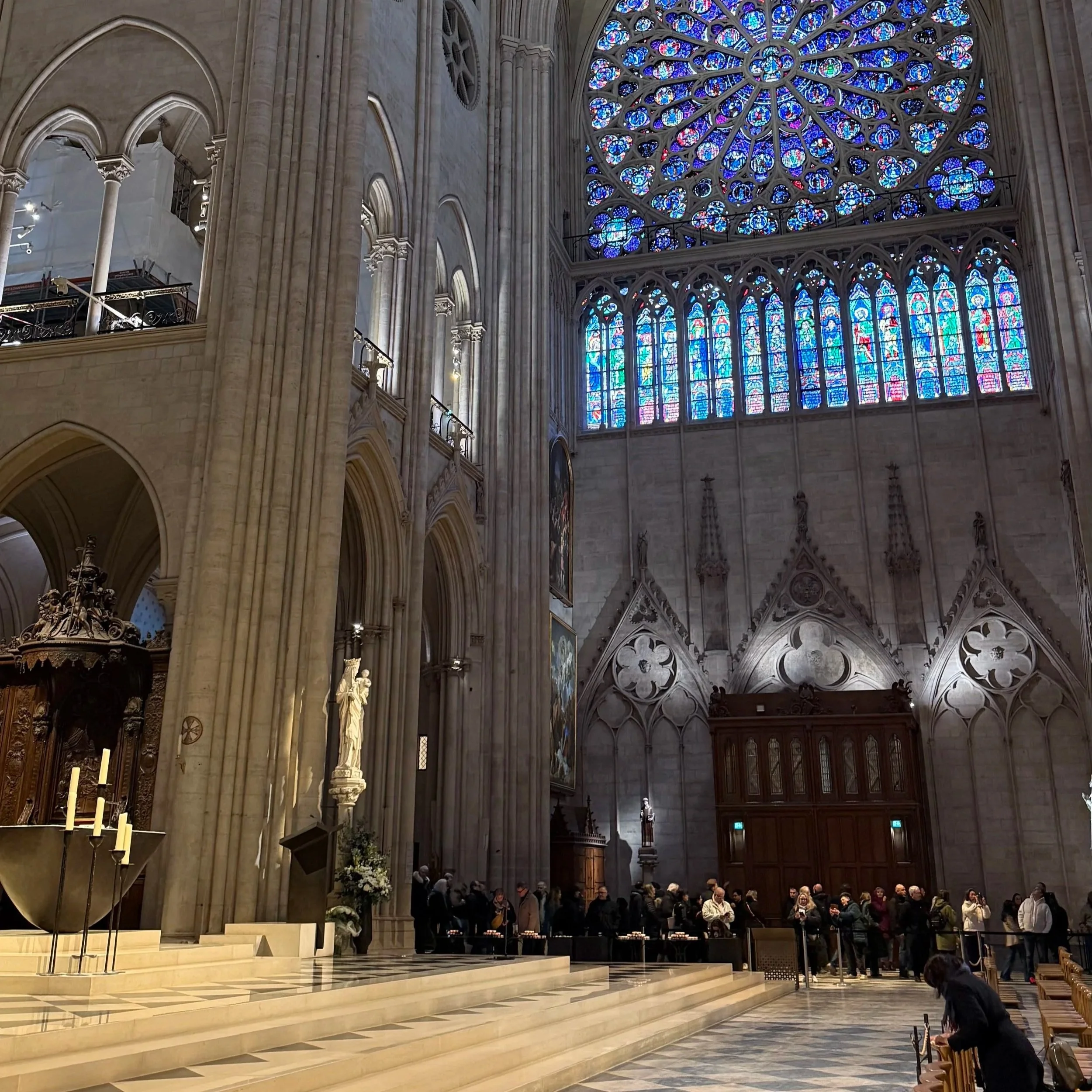
The rose windows Notre Dame has three rose windows (north, south, and west) dating back to the 13th century. The north rose window is the most complete original, and the colors on a sunny day are extraordinary. The rose windows are renowned for their intricate designs and vibrant medieval craftsmanship.
The Crown of Thorns and the TreasuryThe Treasury is open to visitors for a €12 entrance fee, payable on-site. It showcases religious artifacts and artworks including the Crown of Thorns, ornate chalices, medieval manuscripts, and vestments worn by generations of Paris archbishops. It’s worth the extra cost if you're interested in the history of the relics.
The new liturgical furniture The new liturgical furniture, including the baptistery, altar, ambo, tabernacle, and cathedra, were designed in bronze by the Barthélémy Art foundry. They're striking in contrast to the medieval stone around them, and genuinely beautiful.
The towers The towers of Notre Dame reopened in September 2025 during Heritage Days. Tower tickets are €16 and must be booked online in advance. The views of Paris from up there, including the Seine, the Île de la Cité, the city spreading out in every direction, are absolutely spectacular.
Point Zéro On the square in front of the cathedral, look for a small bronze star set into the pavement. This is Point Zéro, the official starting point from which all distances in France are measured. Worth a quick stop before or after your visit.
Practical visitor information
Getting in Entry to the main floor of Notre Dame is free, but book your free time slot in advance to save you a potential wait. Walk-ins are possible but not guaranteed when demand is high.
Hours Notre Dame is open daily from 7:45am to 7pm. On Thursdays it opens until 10pm. Always check the Notre Dame website for the latest info. Early morning on a weekday is the best time for smaller crowds and the best light through the windows.
What it costs
Main floor: free
Treasury: €12, paid on-site
Towers: €16, booked online in advance
Audio guides Available to rent at the reception desk for €5, in multiple languages with accessibility features for hearing-impaired visitors. Free volunteer-led tours also run daily at 2:30pm in French, with English, German, and Portuguese tours on select days.
How long to plan for Allow at least one hour for the cathedral, and one to two hours if you're climbing the towers. Add the Treasury and you're looking at a solid half day.
Getting there Take Metro line 4 to Cité or Saint-Michel, or RER B to Châtelet-Les Halles and transfer to RER C toward Saint-Michel Notre Dame station. The cathedral is on the Île de la Cité in the 4th arrondissement.
What to wear This is still an active place of worship, not just a tourist site, so modest clothing is best. Avoid shorts, tank tops, and low-cut clothing. No hat for men.
Photography Photography is permitted in most areas, but avoid using flash and be respectful of worshippers, particularly during mass.
Security All visitors go through airport-style security screening before entering. Don't bring large bags if you can avoid it.
Left awed
I walked into Notre Dame not expecting much beyond a famous building to check off a list. I walked out thinking about it for days. The scale of it, the age of it, the fact that it almost didn't survive, and then did, because enough people decided it mattered. That's a powerful thing to stand inside.
You don't have to believe in god to understand why humans built this. You just have to be willing to appreciate it.
